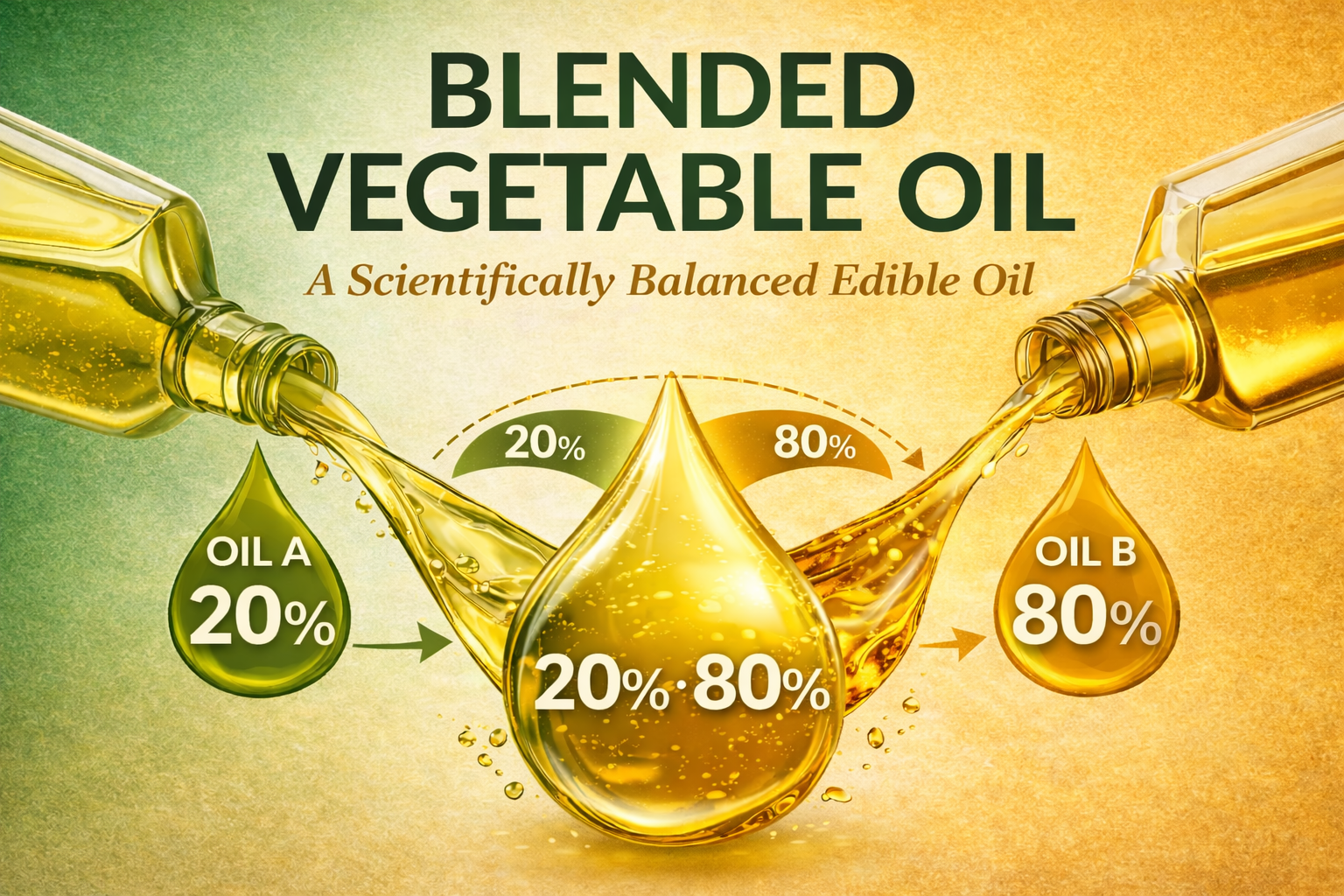
Blended
Vegetable Oils: Indian Regulations, Food Safety Parameters, and Health Benefits
Introduction
Blended vegetable oil is a carefully formulated edible oil
made by mixing two or more vegetable oils in specific proportions to
achieve better nutritional balance, improved stability, and enhanced cooking
performance. In India, blended oils are increasingly promoted
to address nutritional deficiencies, reduce dependence on a single oil source,
and support public health goals.
With rising lifestyle diseases and changing food habits,
understanding blended vegetable oils, Indian rules, food safety
standards, and health impacts has become very important.
What Are Blended Vegetable Oils?
Blended vegetable oils are edible oils produced by mixing
different vegetable oils such as:
· Groundnut
oil
· Mustard
oil
· Sunflower
oil
· Soybean
oil
· Rice
bran oil
· Palm
oil (limited proportion)
· Sesame
(gingelly) oil
The blending is done scientifically to balance saturated
fatty acids (SFA), monounsaturated fatty acids (MUFA), and polyunsaturated
fatty acids (PUFA).
Purpose of Blending
· Improve
fatty acid profile
· Enhance
heat stability
· Increase
shelf life
· Reduce
oxidation
· Provide
cost-effective nutrition
Blended Vegetable Oils in the Indian
Context
India has diverse cooking practices and oil preferences.
Traditionally, people used single-source oils based on
region. However, no single oil provides an ideal fatty acid balance.
Why India Encourages Blended Oils
· High
prevalence of heart disease and diabetes
· Imbalance
of omega-6 and omega-3 intake
· Overuse
of refined single oils
· Need
for affordable and nutritionally balanced oils
The Government of India and food scientists recommend
blending to achieve optimal fat consumption.
Indian Rules and Regulations for
Blended Vegetable Oils
Blended vegetable oils in India are strictly regulated
under food safety laws.
1. Governing Authority
Blended oils are regulated by the Food Safety
and Standards Authority of India (FSSAI) under the Food Safety
and Standards Act, 2006.
2. Legal Definition
According to Indian food standards:
· Blended
oil must contain only edible vegetable oils
· Animal
fats are strictly prohibited
· Each
oil used must be safe and approved for human consumption
3. Mandatory Labeling Rules
Blended vegetable oil labels must clearly mention:
· The
term “Blended Edible Vegetable Oil”
· Names
of oils used
· Percentage
of each oil
· Nutritional
information
· FSSAI
license number
· Manufacturing
and expiry date
Misleading claims such as “pure” or “single oil” are not allowed.
4. Fortification Requirements
In many cases, blended oils must be fortified with
vitamins:
· Vitamin
A
· Vitamin
D
This helps combat vitamin deficiencies common in India.
5. Prohibited Practices
· No
artificial coloring
· No
non-edible oils
· No
harmful additives
· No
trans fats beyond permitted limits
Food Safety Parameters for Blended
Vegetable Oils
Food safety is ensured through strict quality and
chemical parameters.
1. Free Fatty Acid (FFA) Level
· Indicates
oil freshness
· Lower
FFA = better quality
· High
FFA causes rancidity and off-flavors
2. Peroxide Value (PV)
· Measures
oxidation level
· Lower
peroxide value means better stability
· High
PV indicates spoiled or unsafe oil
3. Trans Fat Limit
· Trans
fats must be below permissible limits
· Artificial
hydrogenation is discouraged
· Important
for heart health
4. Moisture and Impurities
· Oil
must be free from water and sediments
· Prevents
microbial growth and spoilage
5. Heavy Metal and Contaminant
Control
· Must
comply with limits for lead, arsenic, and pesticides
· Ensures
consumer safety
Health Benefits of Blended Vegetable
Oils
1. Balanced Fatty Acid Profile
Blended oils provide:
· MUFA
for heart health
· PUFA
for cholesterol control
· Controlled
saturated fats
This balance supports cardiovascular health.
2. Improved Heart Health
· Helps
reduce bad cholesterol (LDL)
· Maintains
good cholesterol (HDL)
· Lowers
risk of heart disease
3. Better Cooking Stability
Blended oils are more stable at high temperatures, making
them suitable for:
· Indian
frying
· Deep
frying
· Repeated
cooking
Reduced oxidation means safer food.
4. Enhanced Nutrient Absorption
Blended oils help absorb:
· Vitamins
A, D, E, and K
· Fat-soluble
antioxidants
5. Reduced Dependence on Single Oil
Using blended oils avoids excessive intake of one type of
fatty acid, supporting long-term metabolic health.
Role of Blended Oils in Indian Diet
Blended vegetable oils fit well with:
· Traditional
Indian cooking styles
· Modern
health-conscious diets
· Cost-effective
household nutrition
They offer a scientific approach to traditional food habits.
Conclusion
Blended vegetable oils represent a smart
combination of science, nutrition, and regulation. When
produced according to Indian rules and food safety standards, they provide
balanced nutrition, improved cooking performance, and better health outcomes.
Understanding food safety parameters and regulatory
compliance ensures that blended oils remain safe, healthy,
and trustworthy for Indian consumers.